
Last checked 2026-08-09
Is My Roblox Game Idea Good? A Practical Self-Check
Check whether a Roblox game idea has a clear player promise, realistic scope, strong first minute, return hook, and fair monetization path.
Use this guide in a real launch plan
Concise answer
A good Roblox game idea is easy to explain in one sentence, visible in one thumbnail, playable in a small first version, rewarding within the first minute, and flexible enough to update after launch. A score cannot predict popularity; it should expose the weakest assumption before production.
State the playable promise
Describe who the player becomes, what they do repeatedly, and what visible reward changes. If the sentence needs several systems or a lore explanation, reduce the first version.
Check the launch version
Score the map, loop, reward path, and page assets you can actually publish. Future worlds, advanced trading, or a large story should not hide a weak first build.
Find the weakest assumption
Compare click promise, scope, first-session clarity, retention, updates, and monetization fairness. The lowest-confidence area becomes the next test rather than a reason to rebuild everything.
Treat the score as a heuristic
Game Idea Lab scores use transparent keyword and completeness checks. They are not Roblox discovery predictions, benchmarks, or guarantees; real player behavior is the evidence layer.
Practical examples
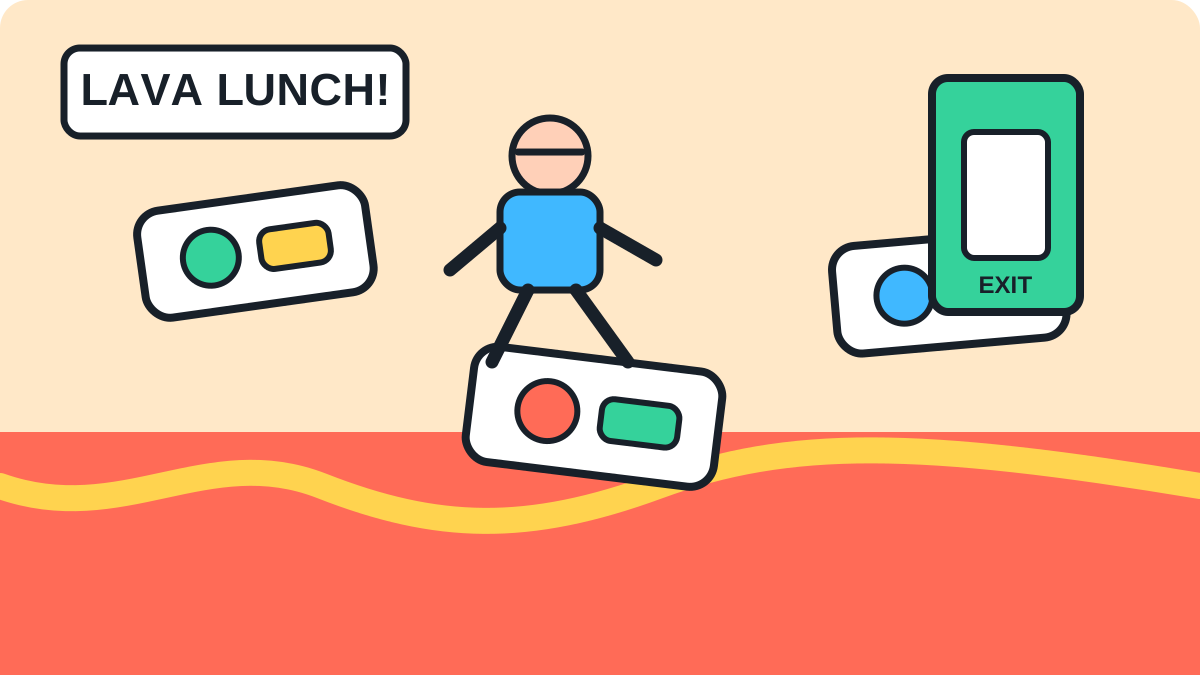
- + Obby: escape a cafeteria course before the bell
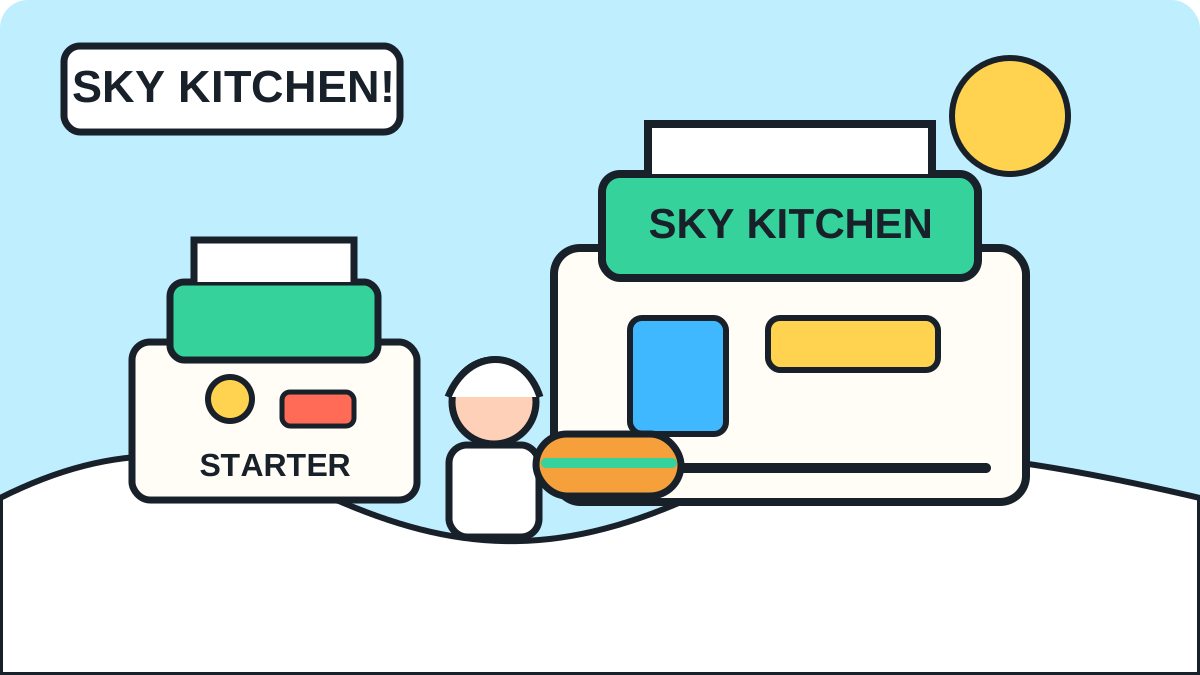
- + Tycoon: grow one cloud kitchen through visible stations
- + Simulator: collect parts to upgrade one delivery drone
- + First-session goal: finish one simple action and see the next reward.
- + Thumbnail test: compare danger, reward, and progression in three variants.
- + Launch copy: one fantasy line, three feature bullets, and one update note.
- + Retention hook: daily goal with a forgiving streak or collection reward.
- + Week-one update: small polish patch plus one new reward path.
Common mistakes
- + Calling a broad setting an idea without naming the repeated action.
- + Assuming originality alone will create clicks or retention.
- + Scoring future features instead of the version you can actually launch.
Copy-ready examples
One-sentence idea test
Use before scoring.
For [player], this is a [genre] where you [main action] to earn [visible reward], then return for [repeatable goal].
Evidence gap check
Use after the first score.
Lowest-confidence assumption: ___
Smallest test: ___
Metric or observation: ___
Keep/revise rule: ___
Practical pattern table
| Creator goal | Use this pattern | Avoid |
|---|---|---|
| More clicks | One clear fantasy plus one visual twist | Official-looking logos or copied IP |
| Better retention | Daily goal, short loop, visible reward | Long tutorials before the first win |
| Fair monetization | Optional cosmetics and clear VIP perks | Misleading urgency or pressure aimed at children |
Action checklist
- + Test the idea on a mobile-size screen before writing more content.
- + Make the first reward or next step visible in under one minute.
- + Cross-link the relevant generator, calculator, and template page.
- + Remove claims that sound official, guaranteed, or copied from another brand.
Related launch examples
FAQ
Yes. A small loop that is clear, polished, and easy to update is often a stronger first launch than a broad game with many unfinished systems.
Sources and evidence boundary
These references define platform concepts or consumer-protection context. Game Idea Lab recommendations and score bands remain independent planning heuristics, not official benchmarks or guarantees.